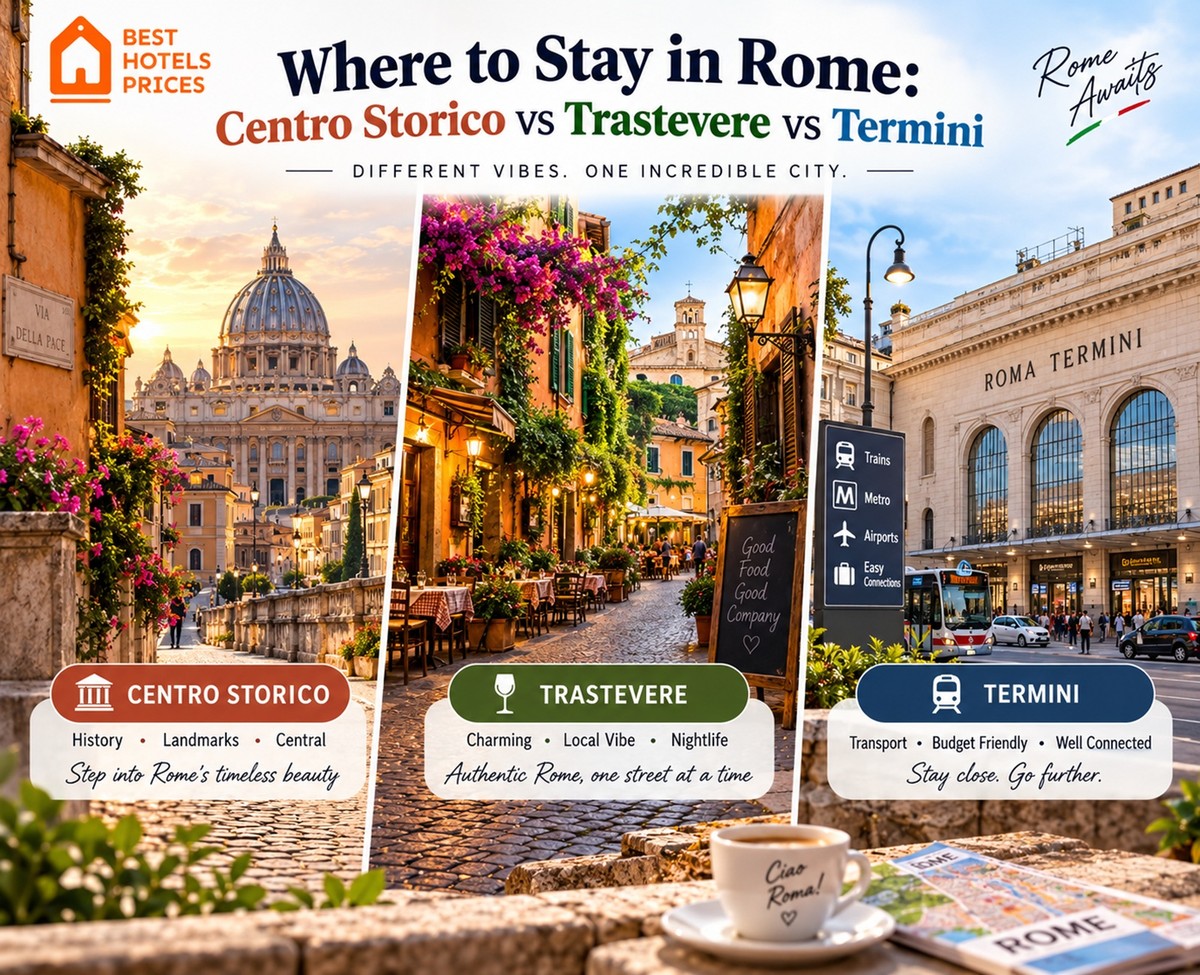
Searching where to stay in Rome can feel like a trap. Guides say “central and charming”, then you end up dragging suitcases over cobblestones, sleeping above a bar, or staying so far out you spend half your trip on the Metro.
This guide cuts it down to the three areas most first-time visitors actually book: Centro Storico, Trastevere, and Termini, with tips to book confidently on sites like Best Hotel Prices instead of guessing from a map.
How To Choose Where To Stay In Rome
Before you compare Rome neighbourhoods, get clear on what matters most: walking distance, nightlife, budget, or airport access. Different areas fit different priorities, and that’s where people usually get it wrong.
Use this simple filter before you book anything. It saves the “we should have stayed there instead” argument on day two.
- Walkers and first-timers: Stay where you can walk to the Pantheon in under 15 minutes.
- Night owls and food lovers: Choose streets with trattorie, not traffic, on the doorstep.
- Early trains and tight budgets: Prioritise transport over atmosphere.
- Nervous about safety: Look for mixed residential streets, not empty office blocks.
Once you know your profile, choosing the best area to stay in Rome becomes much easier. This guide assumes a 3–4 night stay, which is what most visitors book for a first visit.
Centro Storico Old Town Pros And Cons
Centro Storico is the classic historic core: Pantheon, Piazza Navona, Campo de’ Fiori, and every postcard-perfect alley in between. If you want that “open the shutters and there’s a church dome” feeling, this is it.
This is usually the best answer to where to stay Rome first time, but it comes with trade-offs in price and noise.
Why Centro Storico Works So Well
The big upside is simple: you walk everywhere. The Trevi Fountain, Spanish Steps, and even the Colosseum are reachable on foot if you don’t mind 20–25 minutes at a time. You’ll rarely need public transport, which saves time and stress.
- Perfect for short trips: With only three days, cutting transit gives you extra sightseeing hours.
- Easy for mixed-age groups: Grandparents can rest at the hotel while others explore nearby streets.
- Great for evenings: Stroll to dinner and back without worrying about late buses.
The flip side: rooms are smaller, prices are higher, and streets close to Piazza Navona and Campo de’ Fiori can stay noisy until after midnight, especially in high season.
Best Streets And Micro-Areas In Centro Storico
For a quieter stay, look slightly away from the big squares. Around the Pantheon, side streets toward Largo di Torre Argentina feel central but less chaotic. South toward the Jewish Ghetto, you’ll find some of the safest area Rome offers that still feels very local.
Study street views before booking. If a bar terrace sits directly under your balcony in the photos, it will be under your window at midnight too.
Trastevere For Nightlife And Local Feeling
Across the Tiber, Trastevere feels more neighbourhood and less museum. Think laundry on balconies, ivy-covered facades, and trattorie packed with locals and visitors most nights. It’s popular with repeat visitors and younger travellers.
If you’re torn on where to stay in Rome and care more about evenings than early mornings, Trastevere often wins.
Who Trastevere Is Best For
Trastevere suits people who don’t mind walking 20–30 minutes to major sights during the day in exchange for lively evenings. You’ll likely cross Ponte Sisto or Ponte Garibaldi daily and get used to the river view on the way to the historic centre.
- Food-focused trips: Huge choice of trattorie, wine bars and gelato within a few minutes’ walk.
- Couples and friends: Romantic streets and plenty of places for a late drink or dessert.
- Mixed budgets: Wider range of mid-range guesthouses than right next to the Pantheon.
The main downside is crowding and noise on the busiest lanes. If you need quiet, avoid the immediate area around Piazza Trilussa and the tightest lanes behind it, where bars and outdoor tables pack in every evening.
Quieter Corners Of Trastevere
For a more relaxed stay, look toward the northern and uphill parts of Trastevere, closer to the Gianicolo slopes. You’re still near the action but can sleep without earplugs. Streets a little further from the river tend to be calmer and more residential.
Check how far your hotel is from tram stops and bus routes, especially in summer heat. A 15-minute walk in April feels very different from the same walk in August.
Termini Area For Trains And Budgets
The Termini area is the transport hub: main train station, airport buses, both Metro lines, and lots of hotels. It’s practical, not pretty, which is why opinions are so split.
The key is knowing which blocks work and which to skip so you get the convenience without feeling uncomfortable.
When Termini Makes Sense
Termini is useful if you’re catching early trains to Florence or Naples, landing late, or watching your budget. Rooms here often cost less than similar ones in Centro Storico or Trastevere, which helps longer stays.
- Good transport links: Fast access to both Metro lines and main bus routes across the city.
- Easy airport transfers: Train and bus options leave from the station concourse.
- More modern hotels: Larger rooms and lifts are common in this newer part of town.
The trade-off is atmosphere and, for some streets, how they feel late at night. Around any major station you’ll find more loitering, traffic, and low-end tourist shops. This is where focusing on the safest area Rome offers within Termini really matters.
Must Read: Best Time to Book Hotels in Amsterdam for the Lowest Prices
Streets Near Termini To Favour Or Avoid
In general, the eastern and northeastern sides of the station feel more comfortable, especially as you move a few blocks away. Look toward Via Nazionale or up toward Castro Pretorio rather than the streets directly opposite the main station doors.
If a hotel’s photos show metal shutters and graffiti at eye level, assume the street feels very “station area” and decide whether that bothers you, especially if you’ll be arriving back late in the evening.
Centro Storico Vs Trastevere Vs Termini Summary
Once you’ve walked through all three, you see why people argue about the best area. They’re answering different needs. This section pulls together the main points so you can make a quick call.
Think about how you actually spend a day, not just the Instagram shots you want.
- Centro Storico: Best for a classic first visit, short stays, and travellers who want to walk almost everywhere.
- Trastevere: Best for food, charm and nightlife, with a bit more walking to daytime sights.
- Termini: Best for early trains, airport links and tighter budgets, if you choose streets carefully.
If you’re still unsure where to stay in Rome, many travellers split a longer stay: a few nights in Centro Storico, then a few near Termini for early trains.
Whichever you choose, read recent reviews and look closely at photos of the street outside, not just the lobby. That’s usually the quickest way to tell if a place will feel like “your” Rome.
Conclusion
Choosing where to stay in Rome means trading time, budget and nightlife against each other. Centro Storico wins for convenience, Trastevere for evenings, and Termini for connections and price, as long as you pick the right streets.
Once you’ve decided which area matches your style, compare a shortlist of hotels on Best Hotel Prices, check recent guest photos, and lock something in. Rome books up fast, and having the right base makes the whole trip work better.